

VERSION HISTORY
LIRA-FEM
RC Design
-
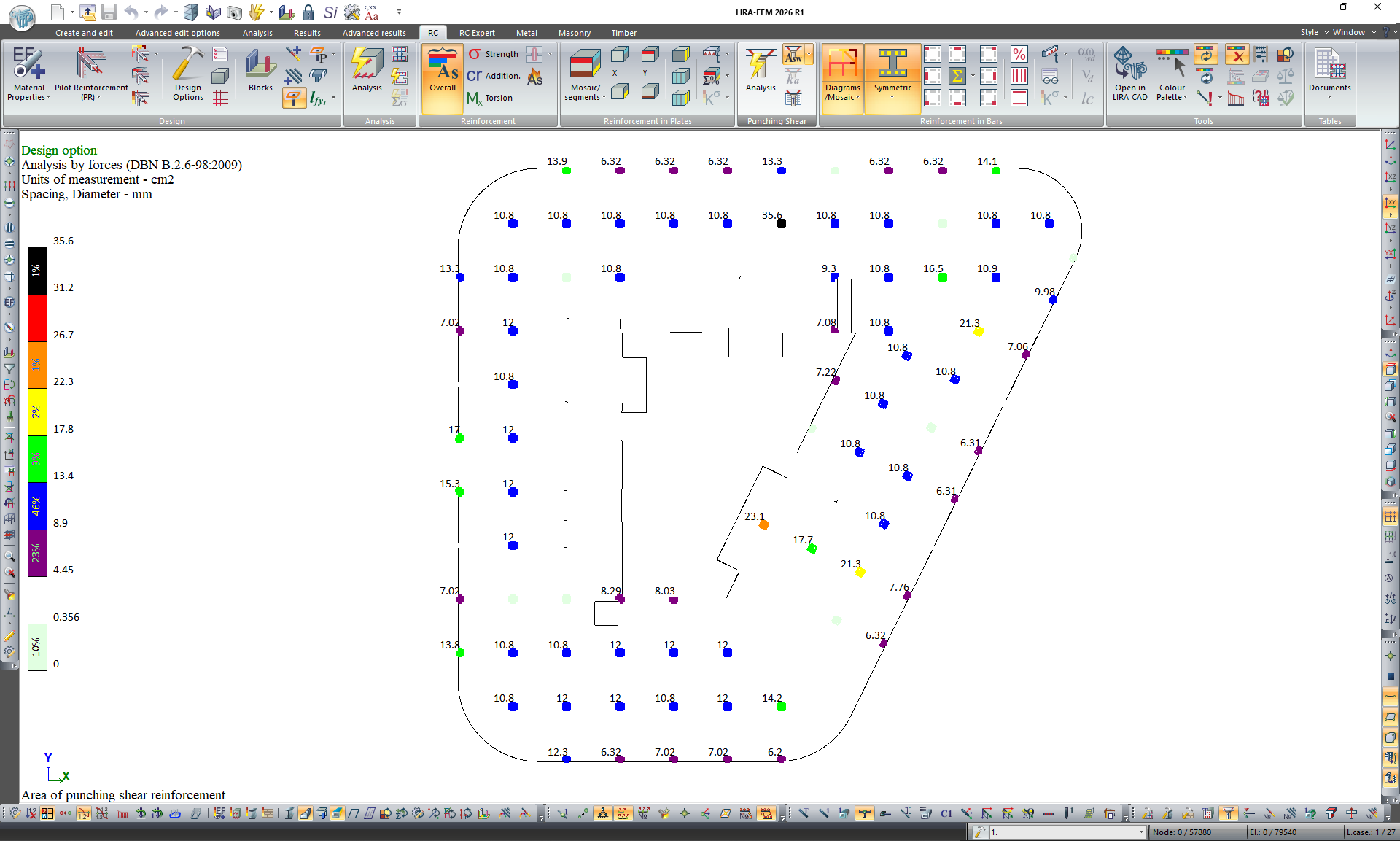
In the parameters of punching shear analysis, consideration of the rotation angle of the punching column has been added. For materials (concrete and transverse reinforcement), partial safety factors are taken into account according to DCF and DCL groups. Also implemented is the option to generate a report with intermediate calculations.
For all implemented codes, analysis of punching reinforcement has been added.
In punching shear analysis, reaction to the force group E1 has been added for progressive collapse verification tasks, with selection of all necessary partial safety factors.
- In the calculation of composite RC sections for concrete-filled tubes with circular steel tubes, the option Consider multiaxial stress state in concrete-filled tubes has been implemented — for adjusting stress–strain diagrams of the concrete core and tube under compression (relevant for compressed sections, while for bending and eccentrically compressed sections with large eccentricity, formulas remain unchanged). Tube behavior in tension corresponds to the original diagram.
- In dialogs related to reinforcement, the local coordinate system of bars has been synchronized with other subsystems — now the bar section is viewed from the end of axis X1, so the local axis Y1 is rotated to the right, consistent across the complex.
- Implemented use of actual specified anchorage for reinforcement layers in PR types for plates when calculating by Wood’s method (instead of reduced values).
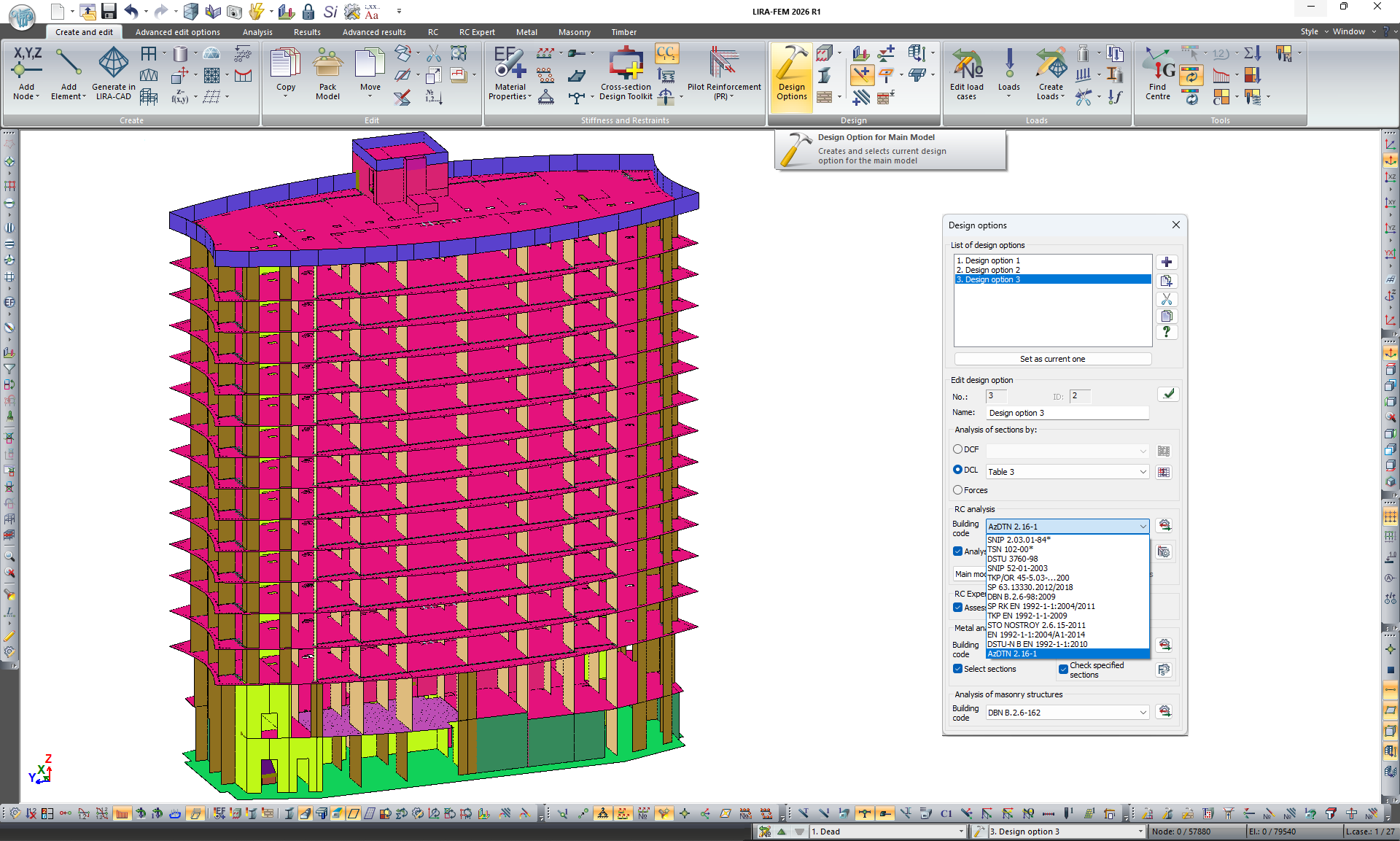
- Implemented calculations according to DSTU-N B EN 1992-1-1:2010 “Eurocode 2. Design of concrete structures. Part 1-1. General rules and rules for buildings” and AzDTN 2.16-1 “Concrete and reinforced concrete structures.” Selection of these codes is available in the Design options dialog.
-
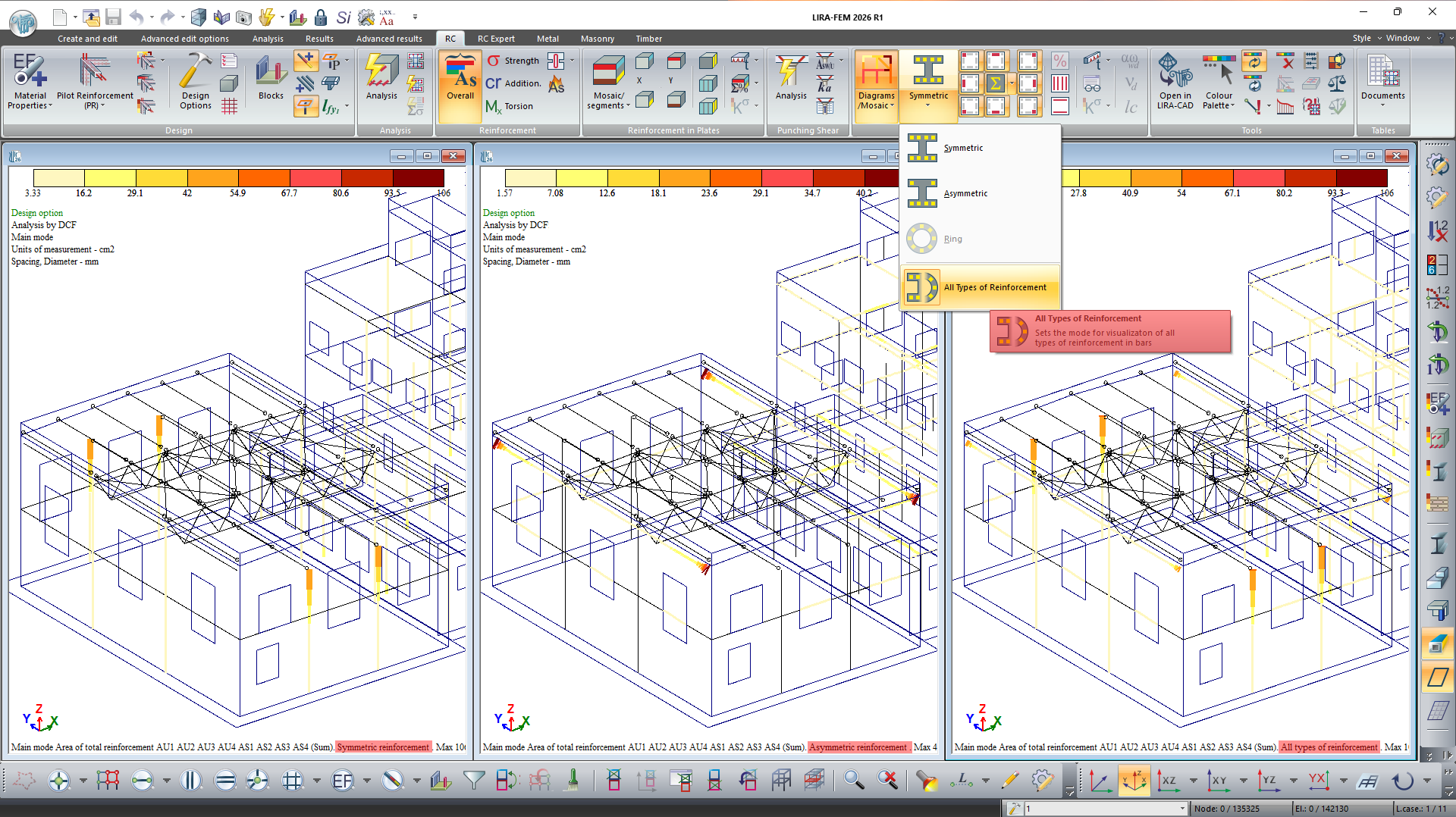
Added a mode for viewing reinforcement selection results of all bar reinforcement types simultaneously (symmetric, asymmetric, ring).
-
Updated reinforcement selection algorithm for problems with superelements.
- Implemented analysis of concrete and reinforcement consumption considering configured reinforcement mosaic plots. This allows visual assessment of material distribution across the design model and faster preparation of data for bill of quantities.
- Additional settings for material properties — concrete and reinforcement (rigid reinforcement) have been implemented for verification and selection of required reinforcement. In particular, the option to consider partial safety factors according to DSTU 9294:2024 “Analysis of buildings for resistance to progressive (disproportionate) collapse” has been added.
- For verification of bearing capacity of bar analogues Wall (Bar), separate assignment of PR types has been implemented in three zones: left/lower edge of section, central part of section, and right/upper edge of section. Exact position of reinforcement bars is considered when determining safety factor. Multiple PR types can be assigned in each zone.
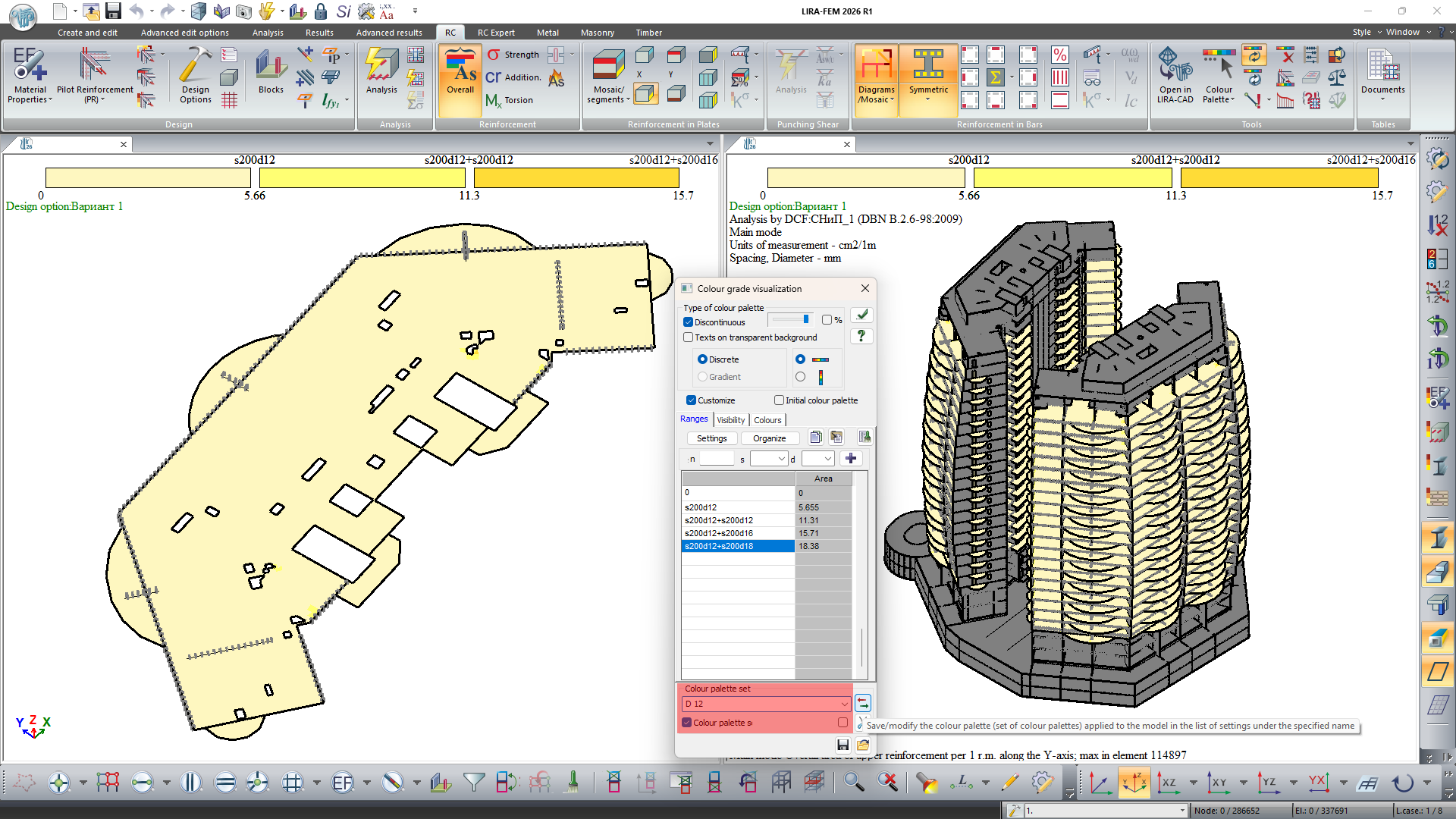
- Added ability to save variants of configured reinforcement scales, allowing saving and switching complete sets of scales for all reinforcement types: longitudinal and transverse reinforcement of plates, transverse reinforcement of plates for punching shear, longitudinal and transverse reinforcement of bars at corners and along section edges, as well as longitudinal reinforcement of bars with ring sections.
- For documentation, the table Reinforcement for punching shear contours has been supplemented with the column Punching reinforcement area per 1 linear meter of perimeter (Asw / U).
- Added ability to simultaneously copy and delete multiple parameters selected in the list for reinforced concrete structures (type / concrete / reinforcement).
- More flexible control of punching shear analysis has been implemented in design options settings. Now each design option has a separate toggle for enabling/disabling punching shear analysis.
- In visualization dialogs of selected reinforcement for composite RC sections, display of steel inclusions has been added.
- Improved synchronization and control of reinforced concrete material data when changing design codes.