

Development Team
The team behind the LIRA, MONOMAKH and other software systems has been working for more than 50 years. During this time, it has accumulated invaluable experience in developing industrial-scale software solutions for the automated design and analysis of construction projects.

The team was founded by Dr. Sci. (Engineering), Professor, Academician of RAACS
Alexander S. Gorodetsky,
who stood at the origins of its creation in the mid-1960s. Under the leadership of
History of LIRA Software
A Brief Chronology of Software Development
It was one of the first software systems that made it possible to replace physical experiments with mathematical simulation. For the first time, engineers and researchers were able to model the entire loading process of structures. In the case of reinforced concrete structures, it became possible to simulate crack development, creep effects, changes in the structural system, and even progressive failure up to collapse.
Unlike existing software of that period, which was based exclusively on the force method, the MODEL program was the first to employ the displacement method and to automate the entire structural analysis process: input and validation of source data, generation of equations, equation solving, and calculation of forces and stresses in frame and plate elements.
The MODEL program introduced an input language that later became the foundation for the entire LIRA software family. The principal concepts implemented in MODEL remain largely unchanged and continue to be used in all LIRA software products today:
user-friendly interface designed for a wide range of engineers;
discrete structural analysis model;
formulation of discrete problems based on the displacement method;
step-by-step solution procedures for nonlinear analysis;
comprehensive automation of the entire analysis process.

The History of LIRA Software
For the M-20 mainframe computer, the PANEL program was developed for the analysis of large-panel buildings. The structural model was represented as a system of orthogonal wall-beams and floor slabs. First, stiffness matrices of large wall-beam and slab fragments were generated, after which the entire building assembled from these fragments was analyzed. In essence, this was one of the earliest implementations of the finite element and superelement concepts (the stiffness matrix of plate elements was constructed using beam approximations).
Many of the ideas implemented in this software later became the foundation of the MONOMAKH software package.
The EXPRESS software package was released for the MINSK-22 mainframe computer. It provided a comprehensive structural design workflow, including static and dynamic analysis, generation of design load combinations, and reinforcement design for arbitrary three-dimensional frame systems. The software offered significantly improved performance and made it possible to solve large-scale engineering problems.
In the MIRAGE software package for the MINSK-22 computer, the finite element and superelement methods were implemented in a form that closely resembles the approach used today in most modern structural analysis programs.
The LIRA-ES software package was developed for the ES EVM computer family using PL/I and Assembly language in the OS operating environment. In many respects, LIRA-ES became the successor to all previous members of the LIRA software family.
The LIRA-SM software package was developed for SM series minicomputers. Many of the algorithms implemented in this version later formed the basis for developments on personal computers. This made it possible, in 1988, to create LIRA-PC for the first AT-286 personal computers. The software already featured graphical pre- and post-processors, the predecessors of modern graphical user environments.
As the capabilities of personal computers expanded, the functionality of LIRA expanded as well, including nonlinear analysis, structural design modules, and the removal of various computational limitations.


DOS versions, 1991
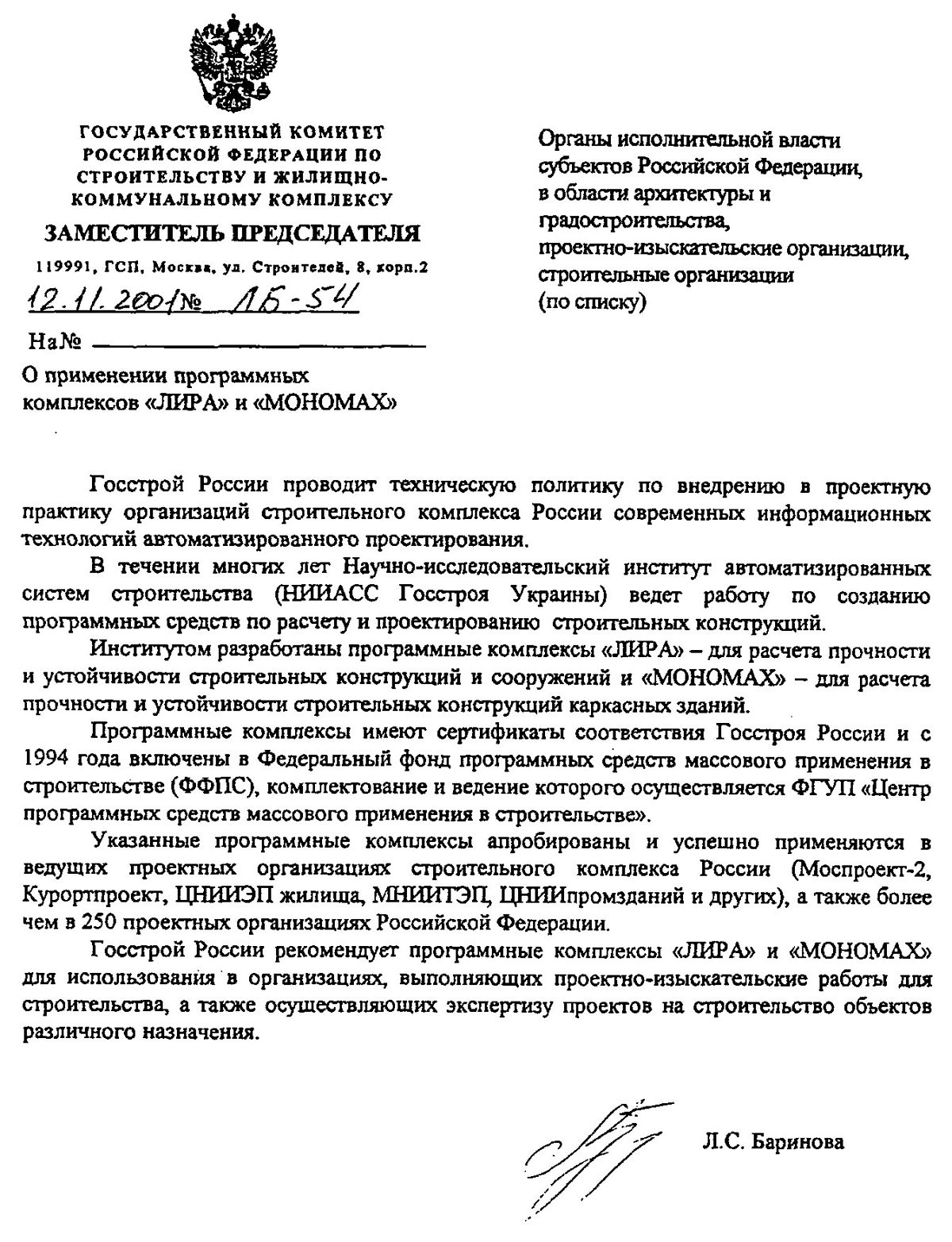
The widespread adoption of the LIRA software family in Ukraine and neighboring countries began in the 1990s
The State Committee for Construction of Russia (Gosstroy) recommends the LIRA and MONOMAKH software packages for use by organizations engaged in design and engineering activities for construction projects, as well as by organizations responsible for the review and approval of construction documentation for facilities of various types.
LIRA Software was redeveloped for the Microsoft Windows operating system. New versions were released approximately every two to three years:
LIRA-WINDOWS (1996)
LIRA 5.0 (1998)
LIRA 8.0 (2000)
LIRA 8.2 (2001)
LIRA 9.0 (2003)
LIRA 9.2 (2005)
LIRA 9.4 (2007)
LIRA 9.6 (2009)
LIRA-SAPR 2011 (2011)
LIRA-SAPR 2012 (2012)
LIRA-SAPR 2013 (2013) - LIRA-SAPR 2024 (2024)
LIRA-FEM 2025 (2025)
LIRA-FEM 2026 (2026)
the latest version is always available here
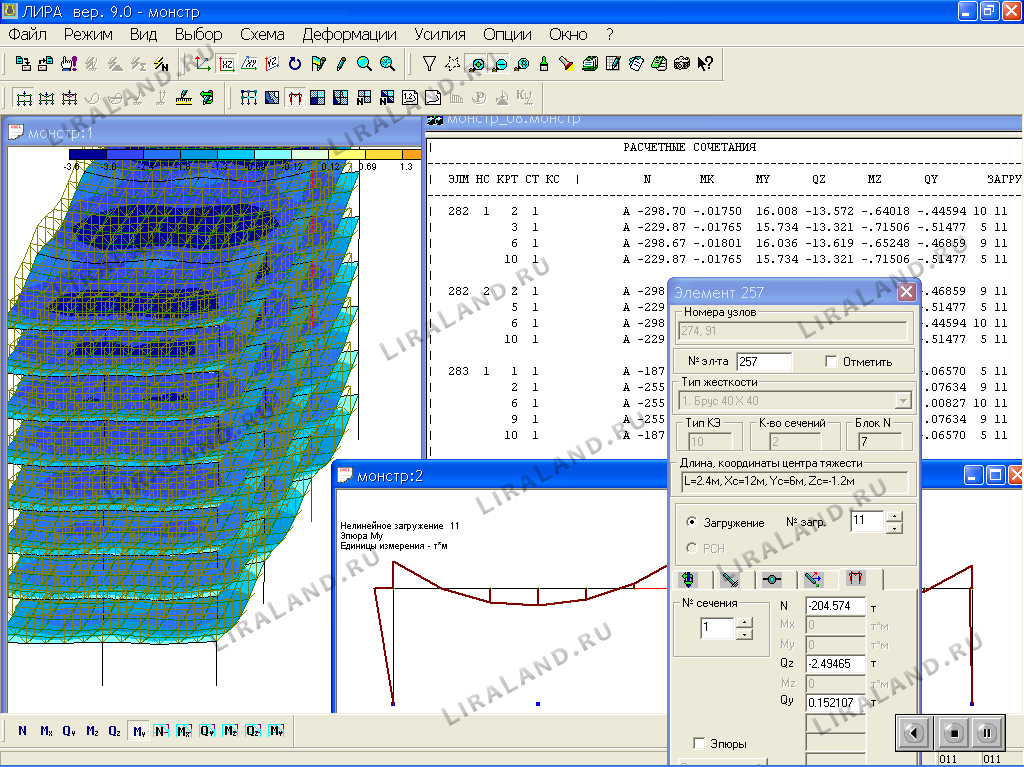
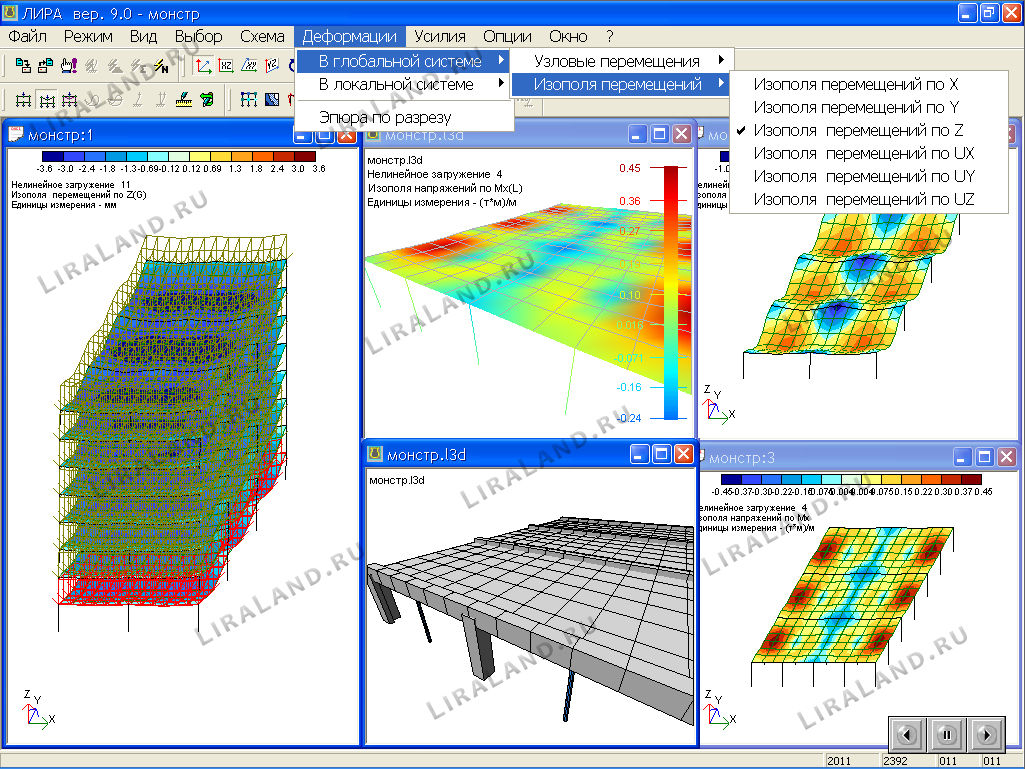
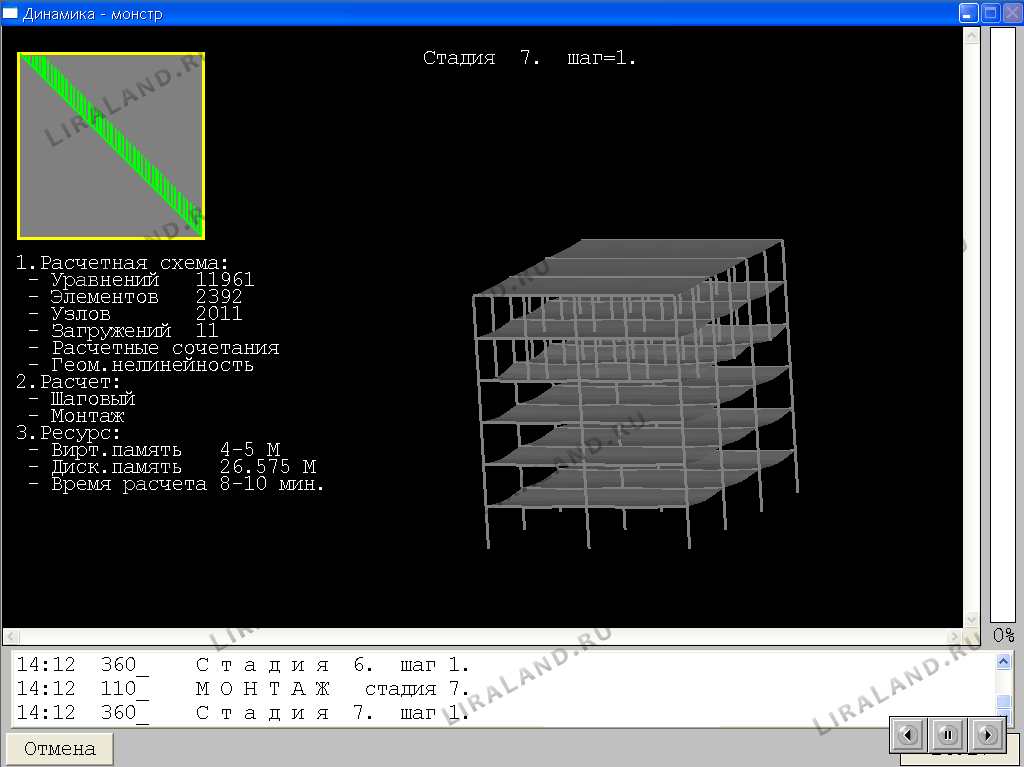
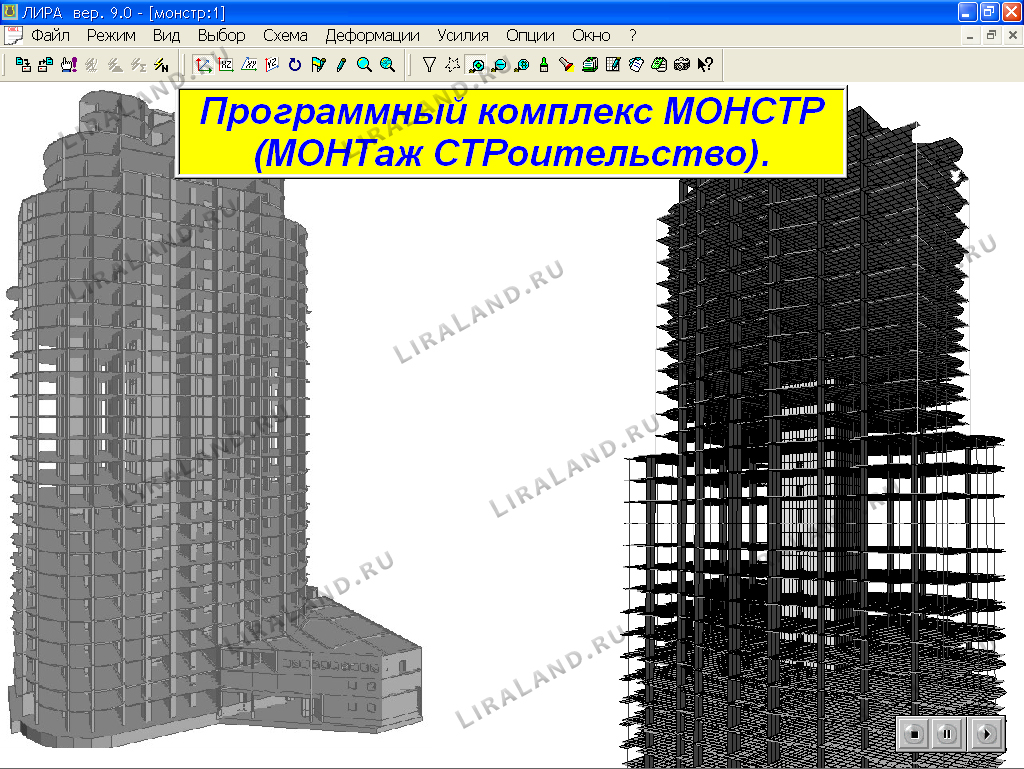
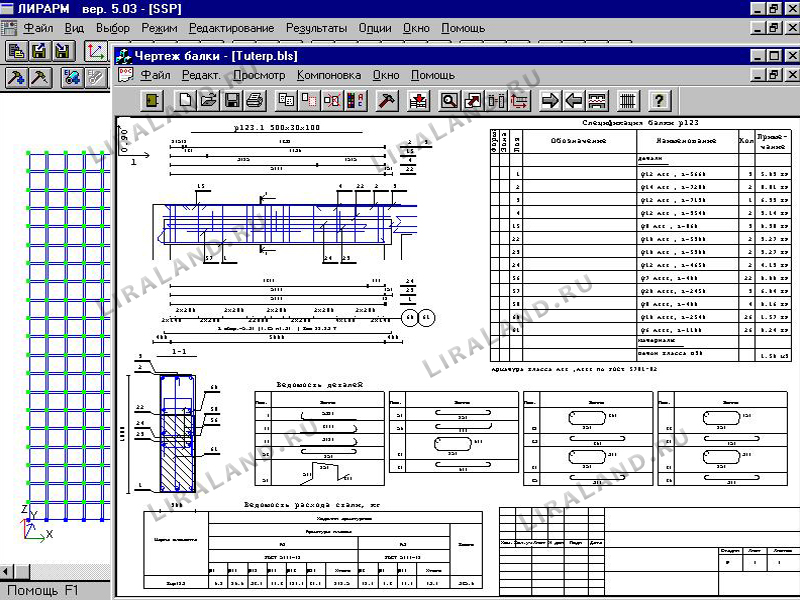
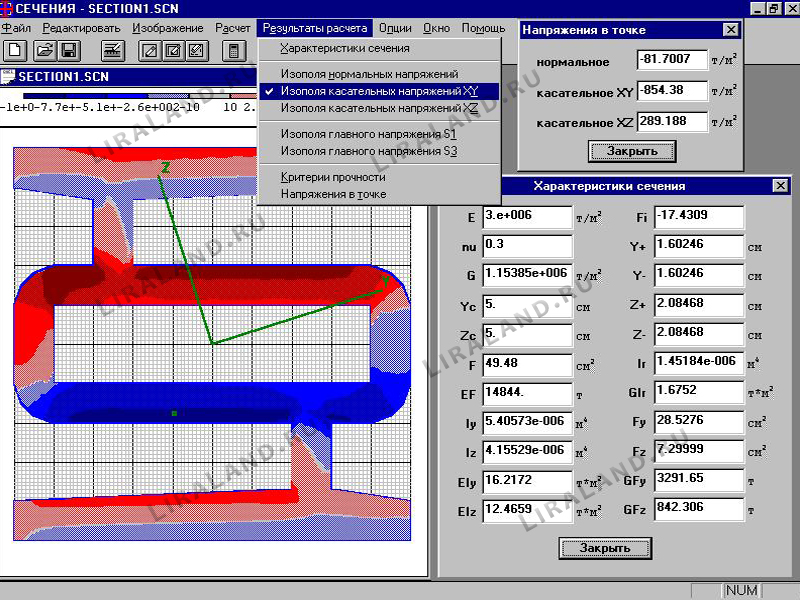
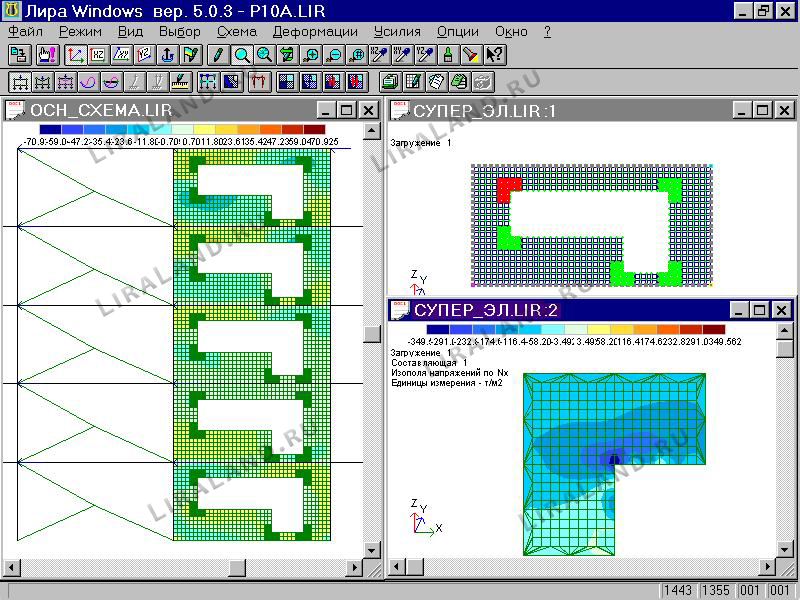
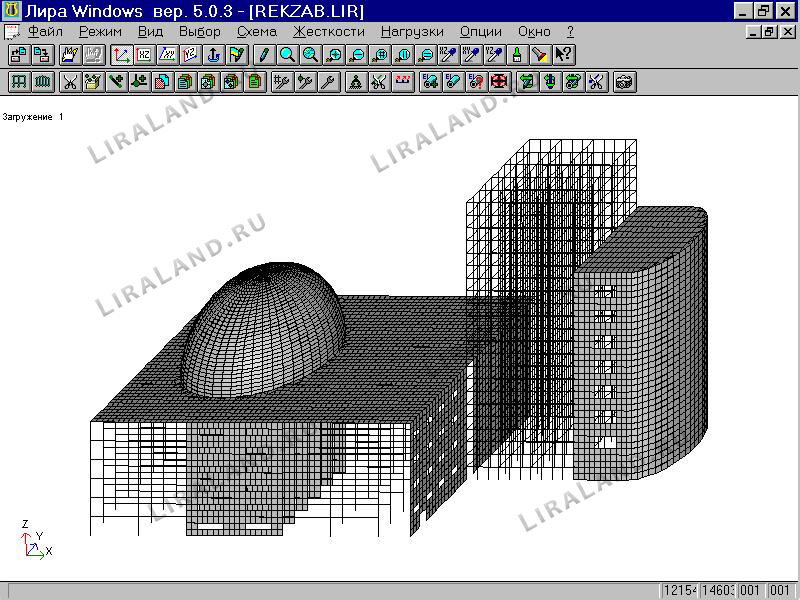
Early Windows Versions
In 2002, a copyright certificate was issued for LIRA Software (based on the LIRA 9.0 configuration)
The authors — A. V. Gorbovets, A. S. Gorodetsky, and V. E. Pavlovsky — were among the principal developers of LIRA and specialists who stood at the origins of the software family and are rightfully considered the founders of these developments.

1990s
The MONOMAKH software package was developed for the automated analysis and design of reinforced concrete and reinforced masonry structures used in multi-storey buildings. The software addressed a highly demanded class of engineering problems and automated a significant part of the structural design process, including the generation of design sketches and, for certain structural elements, complete working drawings.
In addition to large software systems, considerable attention was given to automating small engineering tasks required in everyday practice. For this purpose, the ESPRI software package (Electronic Engineer's Reference Book) was created. Today it includes more than 80 programs grouped by engineering disciplines, including reinforced concrete, steel, reinforced masonry, timber structures, loads and actions, and many others.
The SAPFIR software package was developed for architectural building modeling and conceptual design automation. The digital building model created in SAPFIR provides an information link with the LIRA and MONOMAKH software systems, enabling automatic quantity takeoff, integration with cost estimation software, and data exchange with construction management systems.
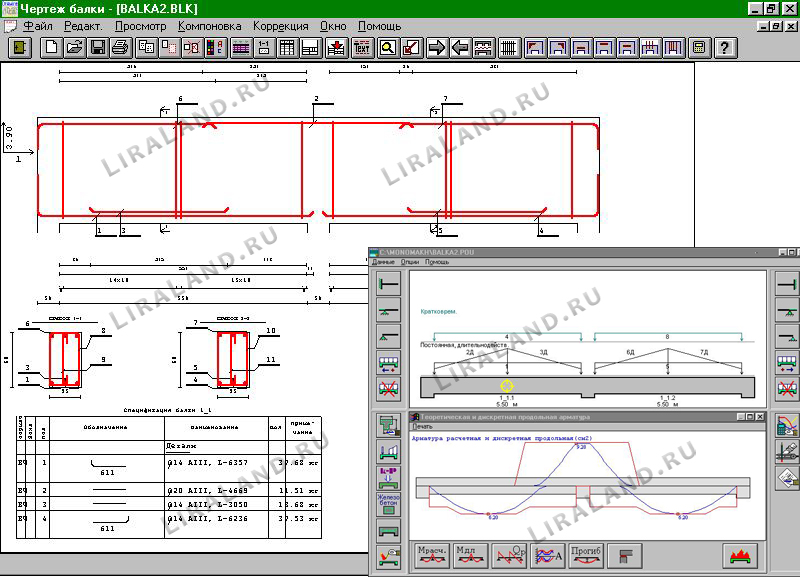
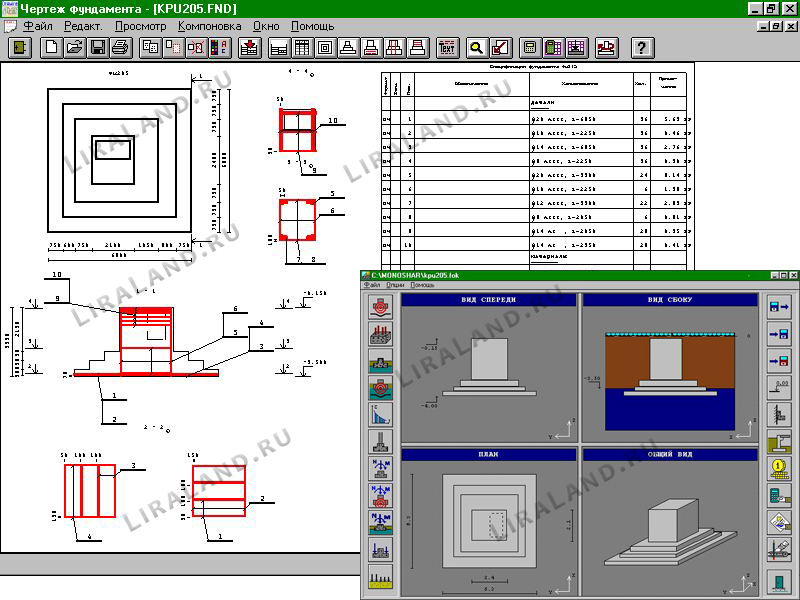
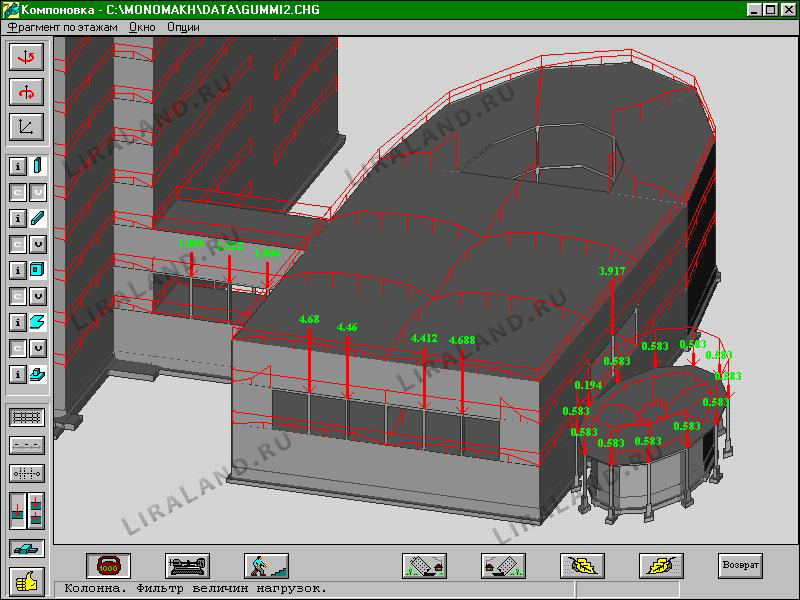
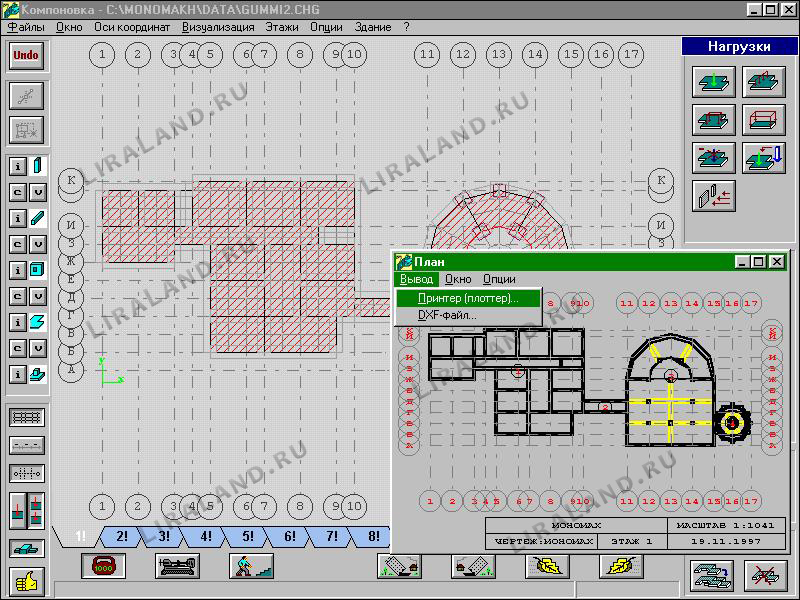
Early Windows Versions
The team representing the LiraLand Group is focused on developing integrated CAD solutions based on Building Information Modeling (BIM) technologies and continuously improving the LIRA-CAD, ESPRI, MONOMAKH, and LIRA-FEM software products for the design and analysis of civil, industrial, and mechanical engineering structures of various types and purposes.
LIRA-FEM Software Suite
continues to evolve in several key directions
Expanding Functionality
new tools for creating and editing architectural and analytical models, including LIRA-CAD, an alternative Ribbon user interface, conceptual and variant-based design capabilities, and many other features.
Advancing Engineering Analysis
engineering nonlinearity, advanced accelerogram-based analysis methods, new step-by-step nonlinear solution procedures, enhanced stability analysis techniques, Pushover Analysis, and other innovative capabilities.
Development of Design Systems
implementation of new design standards and codes, development of specialized reinforced concrete design tools, and further expansion of structural detailing and design capabilities.