

VERSION HISTORY
LIRA-FEM
Loads
- In LIRA-CAD, parameters have been added for calculating dynamic load using the direct dynamic method with the Time history analysis system.
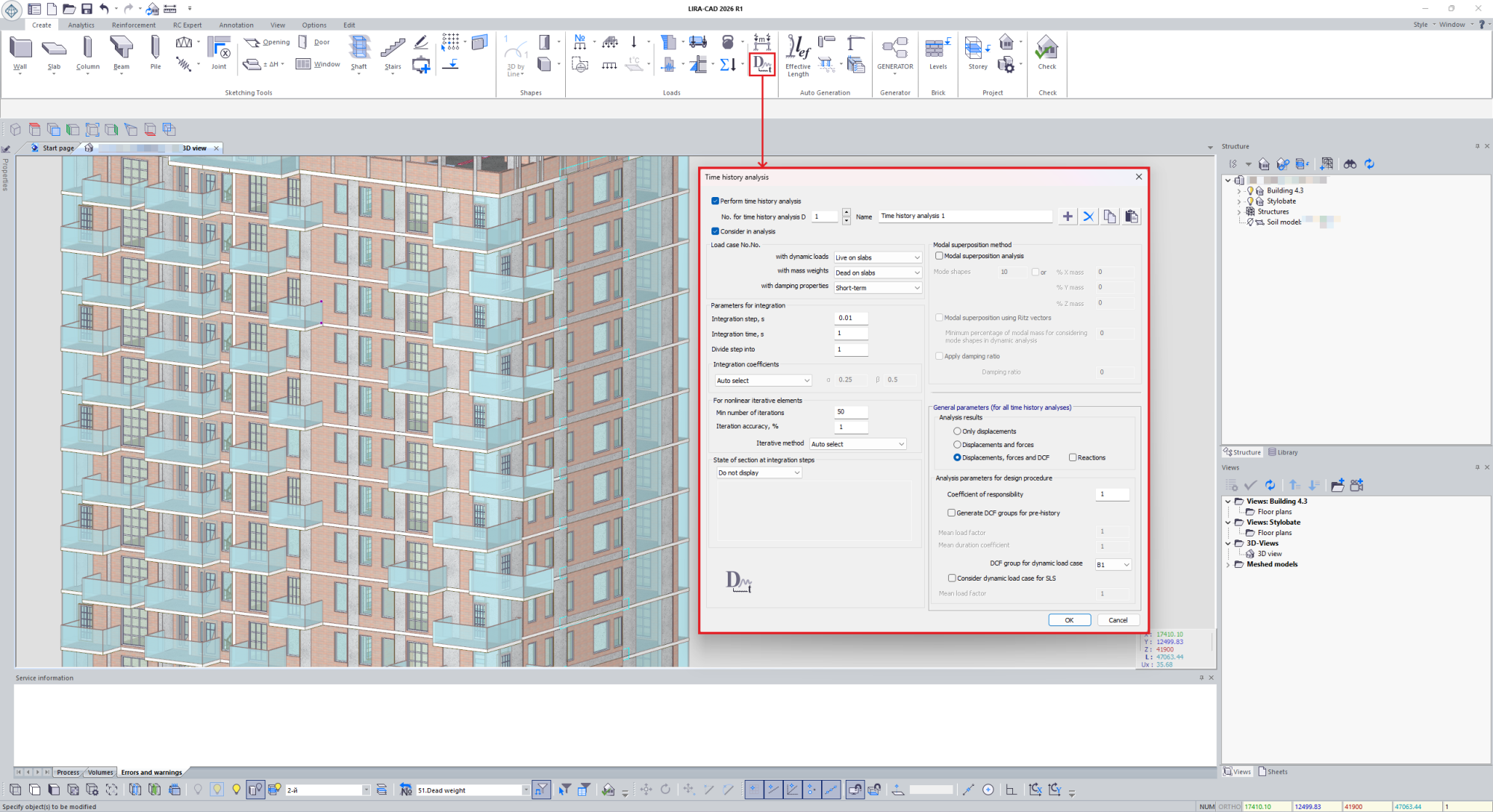
Dialog window "Time history analysis"
- Implemented an algorithm for preparing input data for the Mass redistribution groups tool, simplifying model preparation for calculations with mass redistribution.
- Added automatic collection of snow loads on slabs, inclined slabs, variable-thickness slabs, and roof types: single-pitch, double-pitch, and vaulted.
Snow load is collected considering load cases according to standards: DBN V.1.2-2:2006, DSTU-N B EN 1991-1-3:2010, NP to SP RK EN 1991-1-3:2003/2017, and SNIP 2.01.07-85.
- Added the ability to define a snow mound on inclined surfaces.
-
An alternative method of defining moving loads has been implemented, adapted to the standard logic of LIRA-CAD tools.
All moving loads from the library are now available directly in the Moving load command properties panel. The user selects the command, defines the trajectory line, chooses the required load from the list, and creates its path in the model.
Custom moving loads can also be created and saved to the library — after that, they automatically become available in the command properties panel.
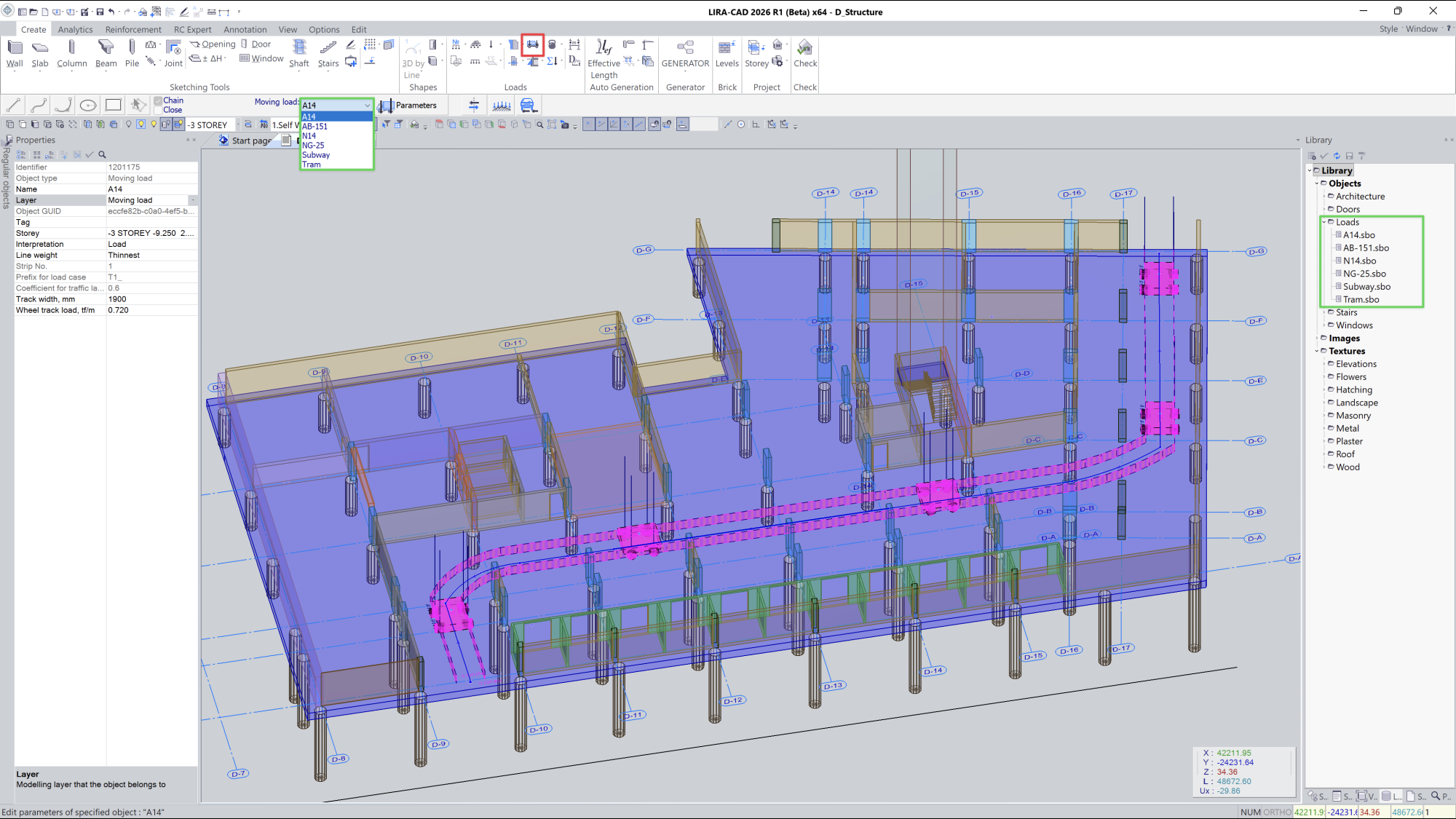
Moving load
- Added the ability to apply uniformly distributed loads on curved surfaces. Application is performed through object properties.
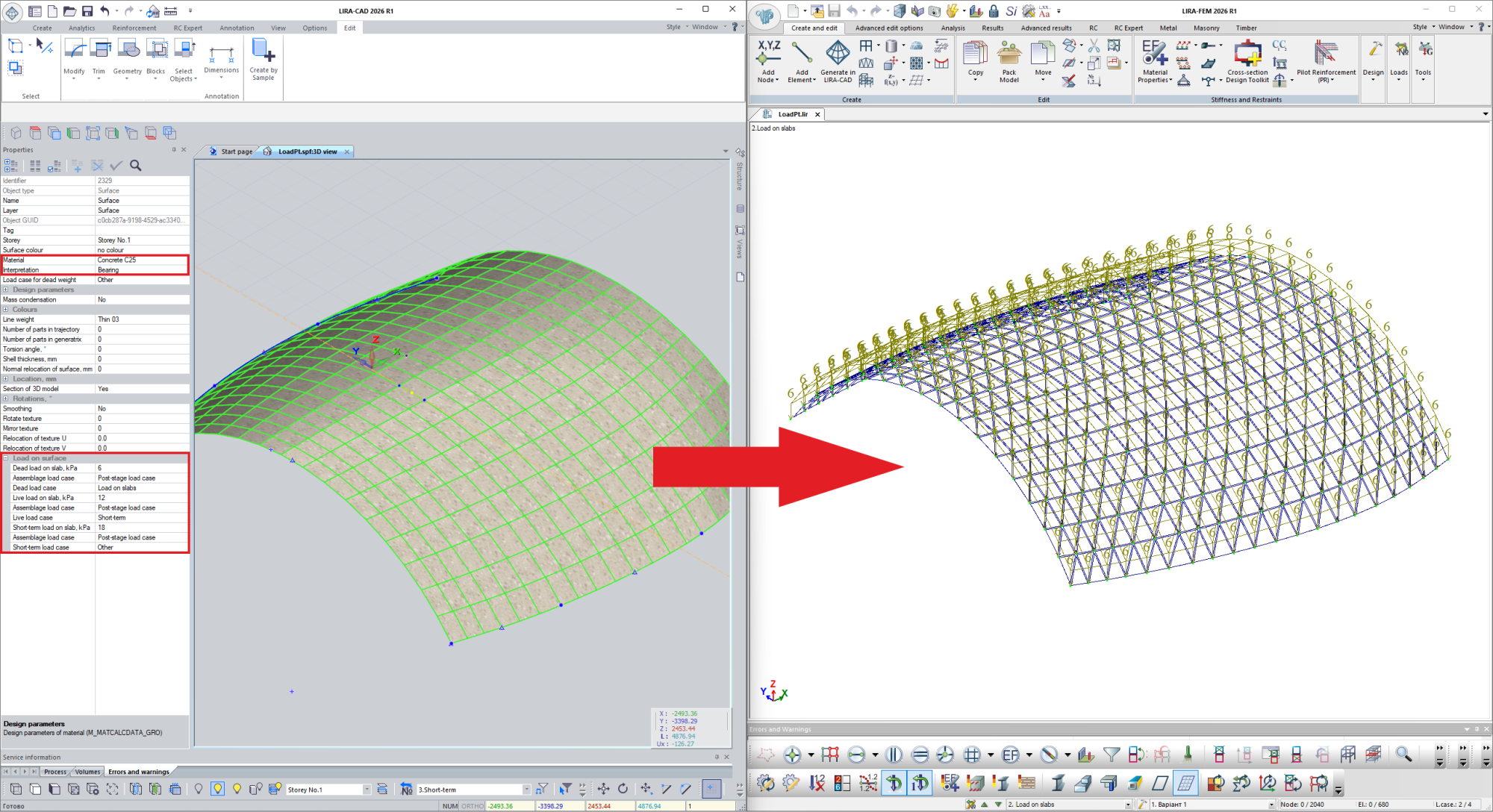
Surface loads
- An algorithm has been implemented in LIRA-CAD for preparing input data for Fragment load calculation. This allows automatic creation of data for collecting loads on walls and columns without additional refinement of the design model in LIRA-FEM.
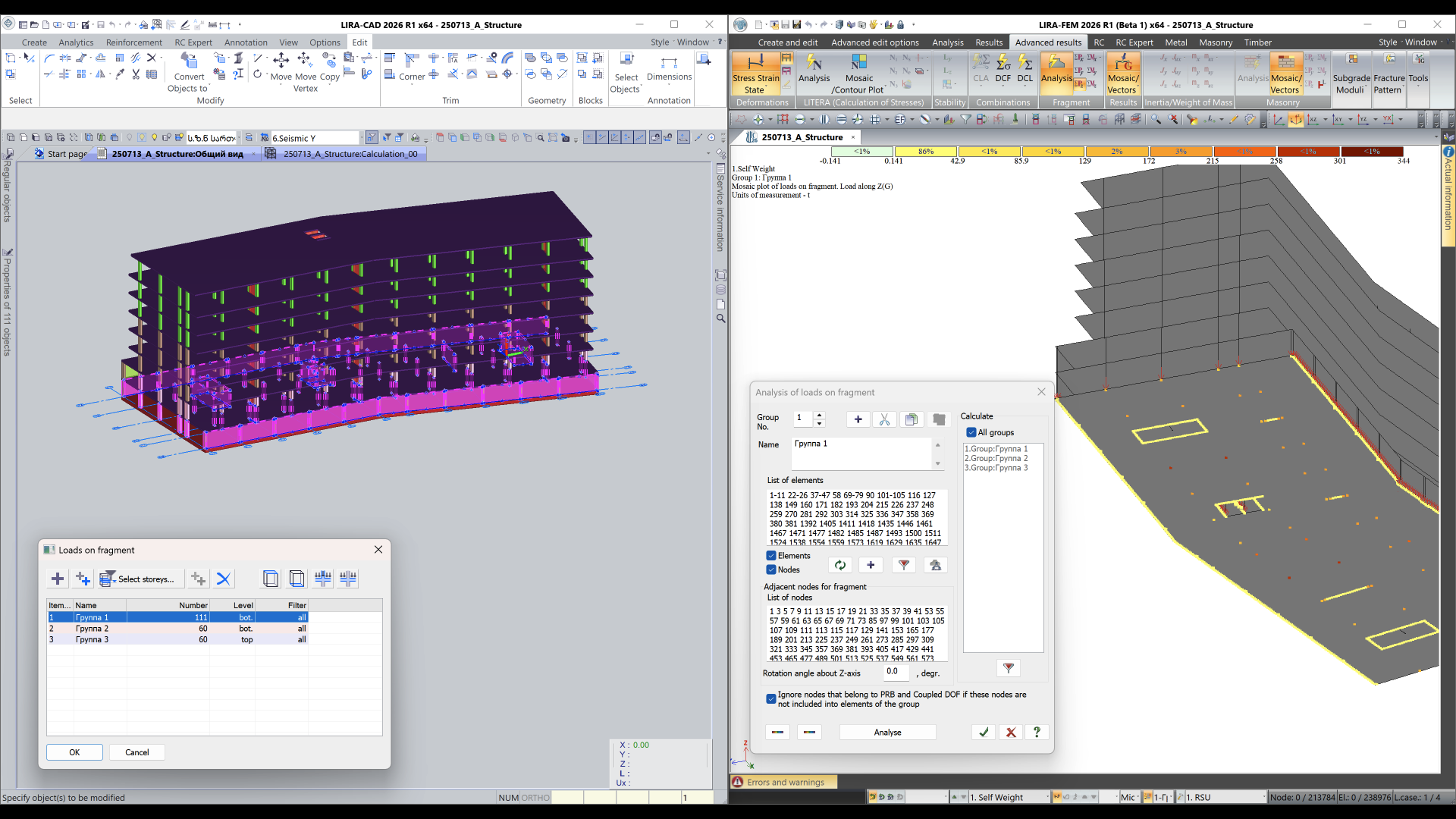
Formation of fragment load input data
- Improved logic for determining loads during formation of additional assembly and post-stage loads. An Assembly load parameter has been added to all loads and load-generating objects.
- In the Object visibility filter dialog, load display management has been expanded: separate visualization and hiding parameters have been added for concentrated loads, linear loads, and surface loads.
- Load commands on the ribbon have been reorganized. The load panel is now structured by load content rather than by construction method, as before.