

VERSION HISTORY
LIRA-FEM
What's new in the analysis results
-
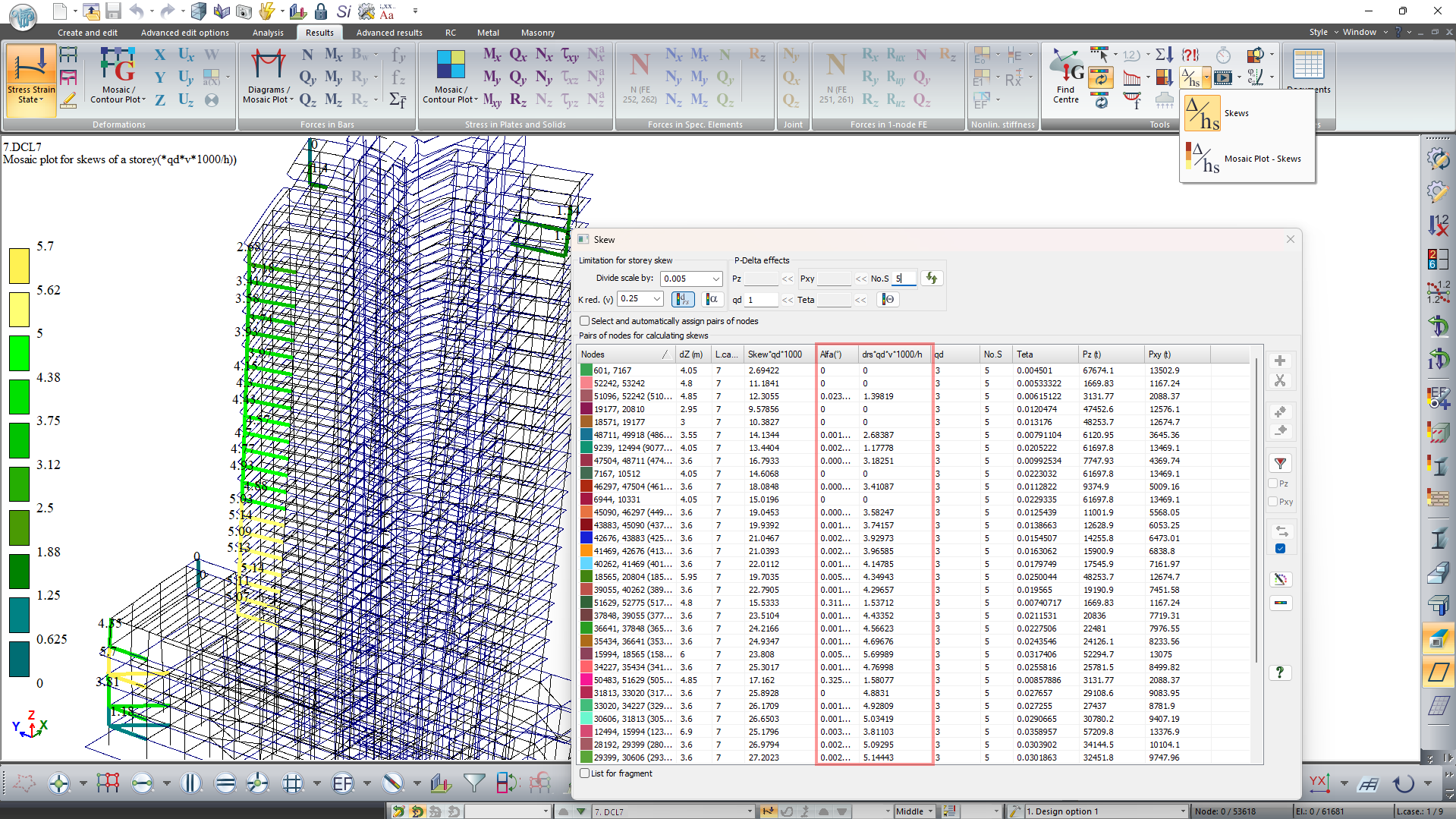
Calculation of structural drifts:
Added a tool for analyzing the limitation of horizontal storey drifts according to the requirements of SP RK EN 1998-1-1:2004/2011 (see formulas 7.5–7.10 NTP RK 08-01.2-2021) and EN 1998-1:2004: Eurocode 8: Design of structures for earthquake resistance – Part 1: General rules, seismic actions and rules for buildings, section 4.4.3, DSTU-N B EN 1998-1:2010 Eurocode 8. The check is performed to ensure the integrity of enclosing and other non-load-bearing structures.
Added calculation of the displacement behavior factor qd based on the specified responsibility coefficient K1 according to the requirements of ICS SNiP RT 22-07-2018 (Tajikistan) (Table 3, Appendix 4).
Added an option that, when enabled, pointing to a node belonging to the drift automatically highlights all nodes of this drift on the model and selects the corresponding rows in the node list for drift determination.
Added an option to create node pairs for determining structural drifts along several separate vertical branches in plan.
-
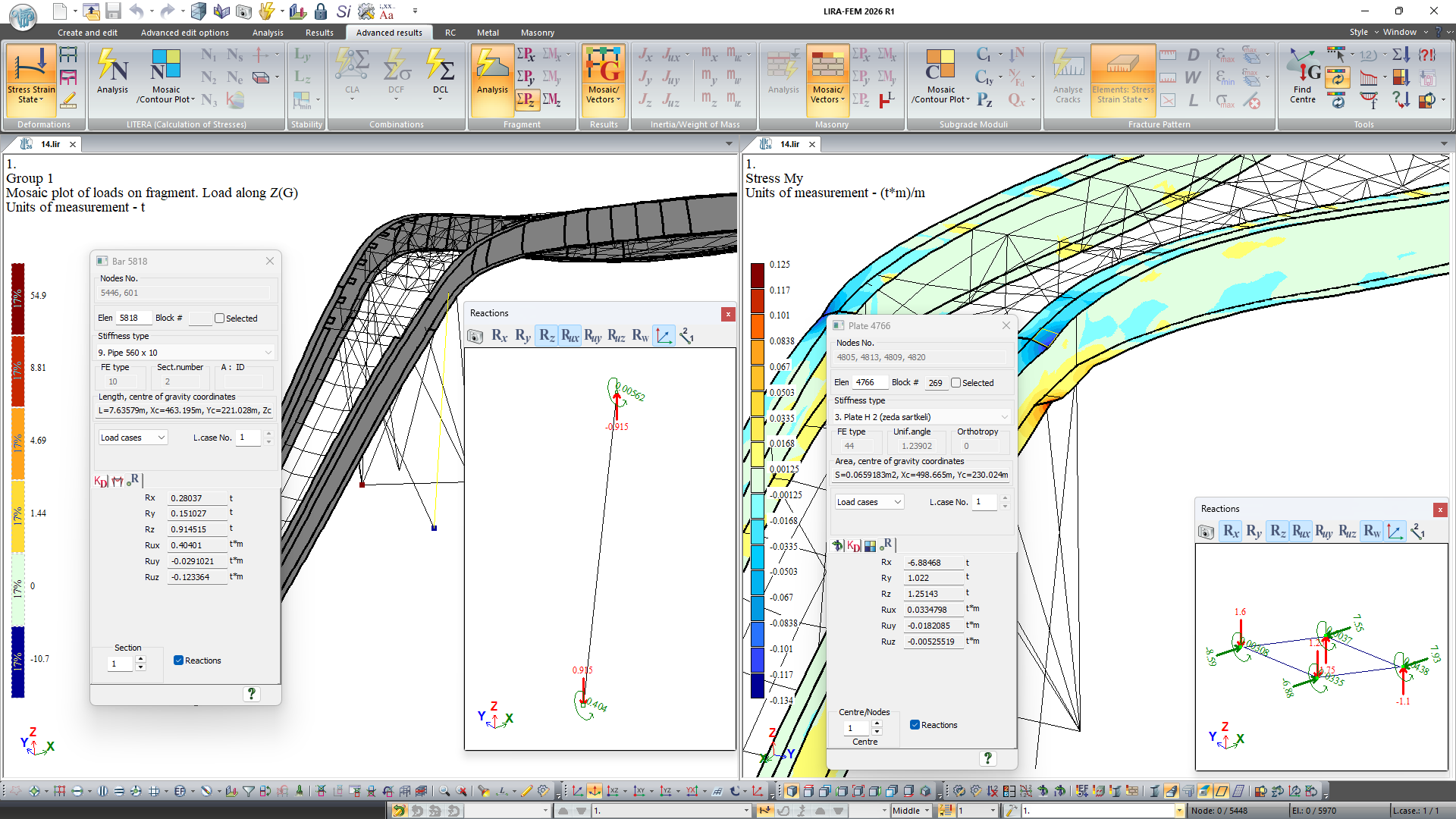
In the Element information dialog, a new view has been implemented — displaying nodal reactions. The element is visualized in isometry with directions and values of reactions at nodes, considering sign conventions.
-
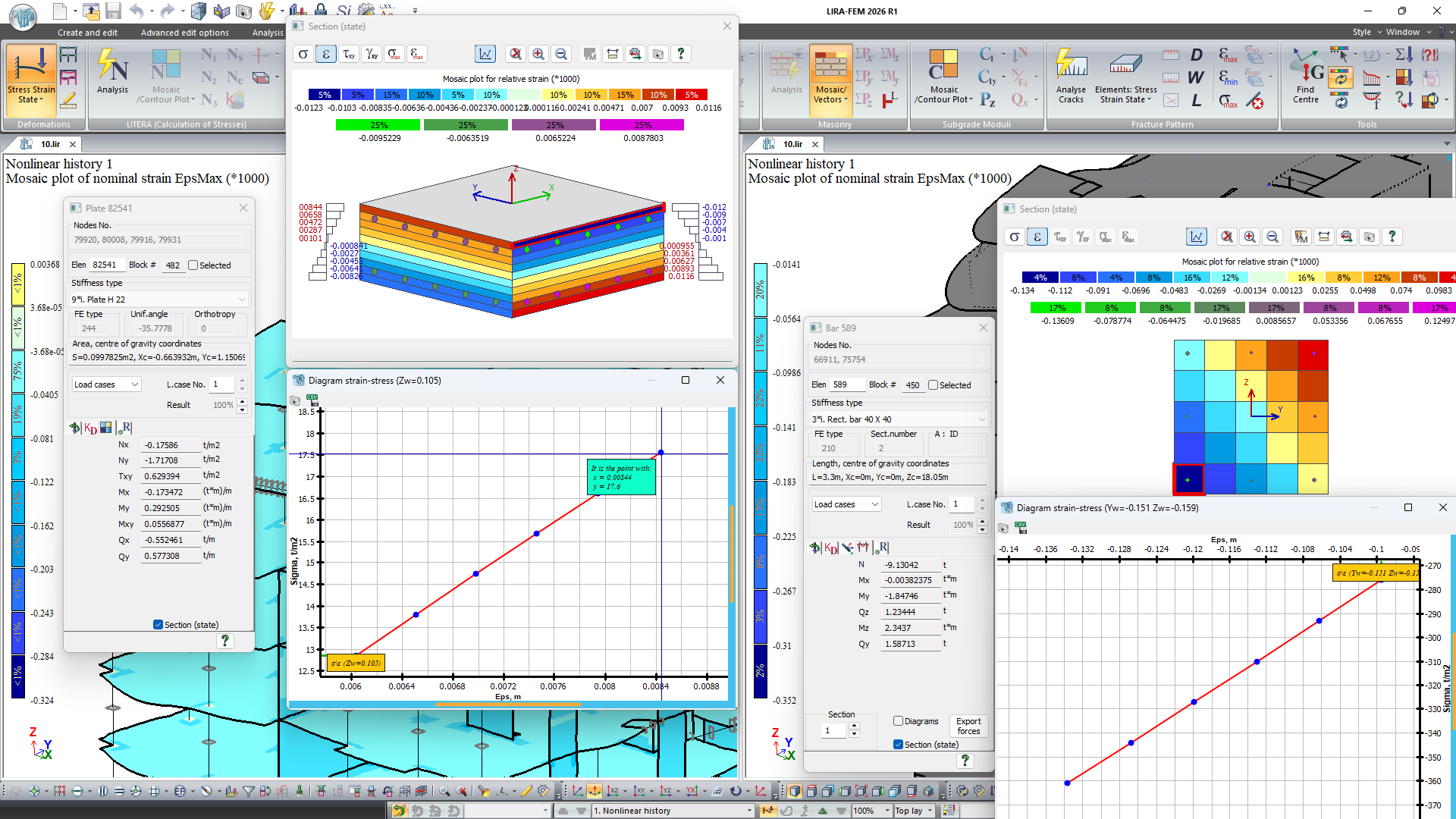
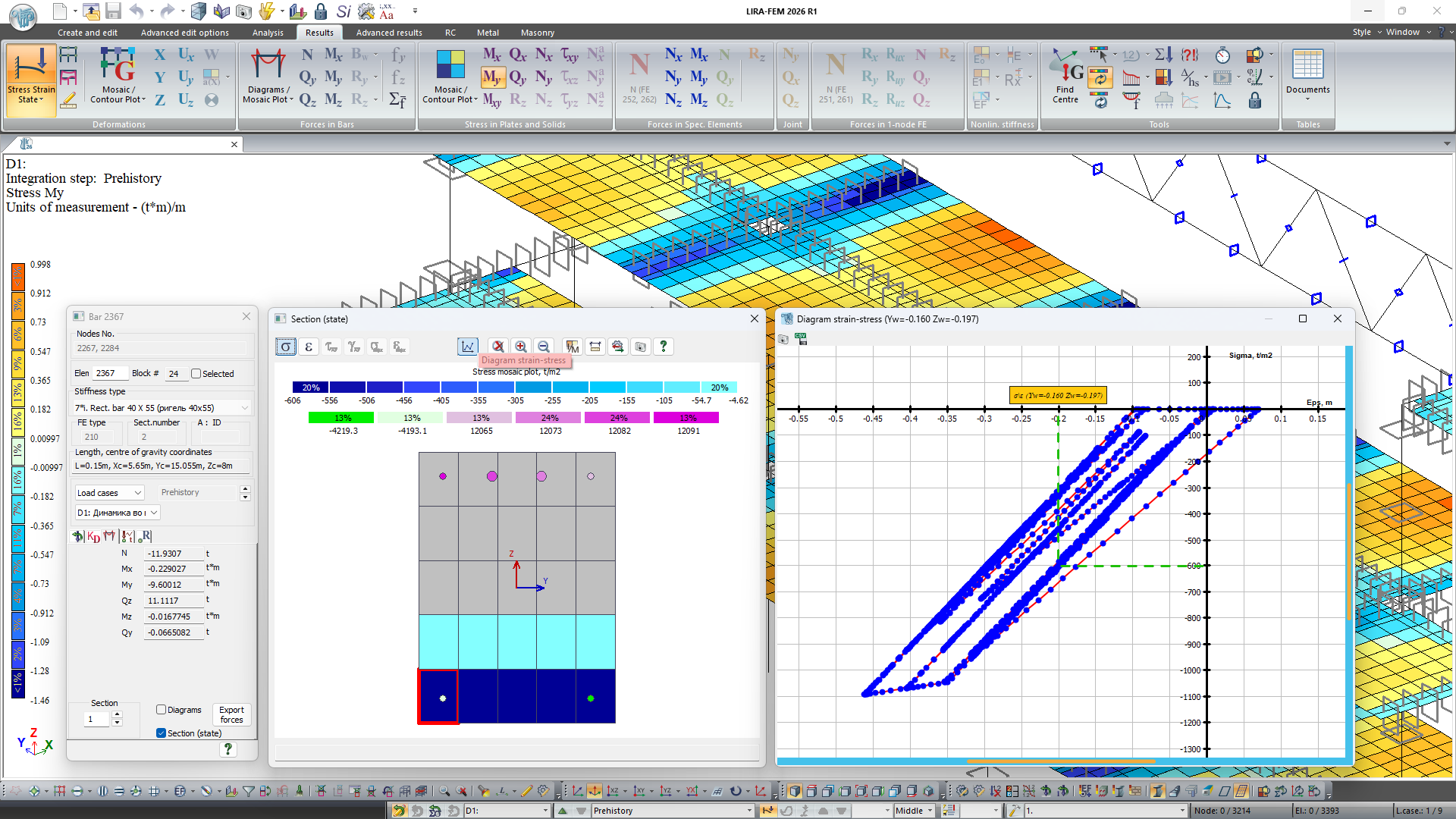
In the Section state dialog, the ability to plot stress–strain diagrams for a selected elementary area/strip of bar, plate, or solid iterative physically nonlinear element has been implemented.
-
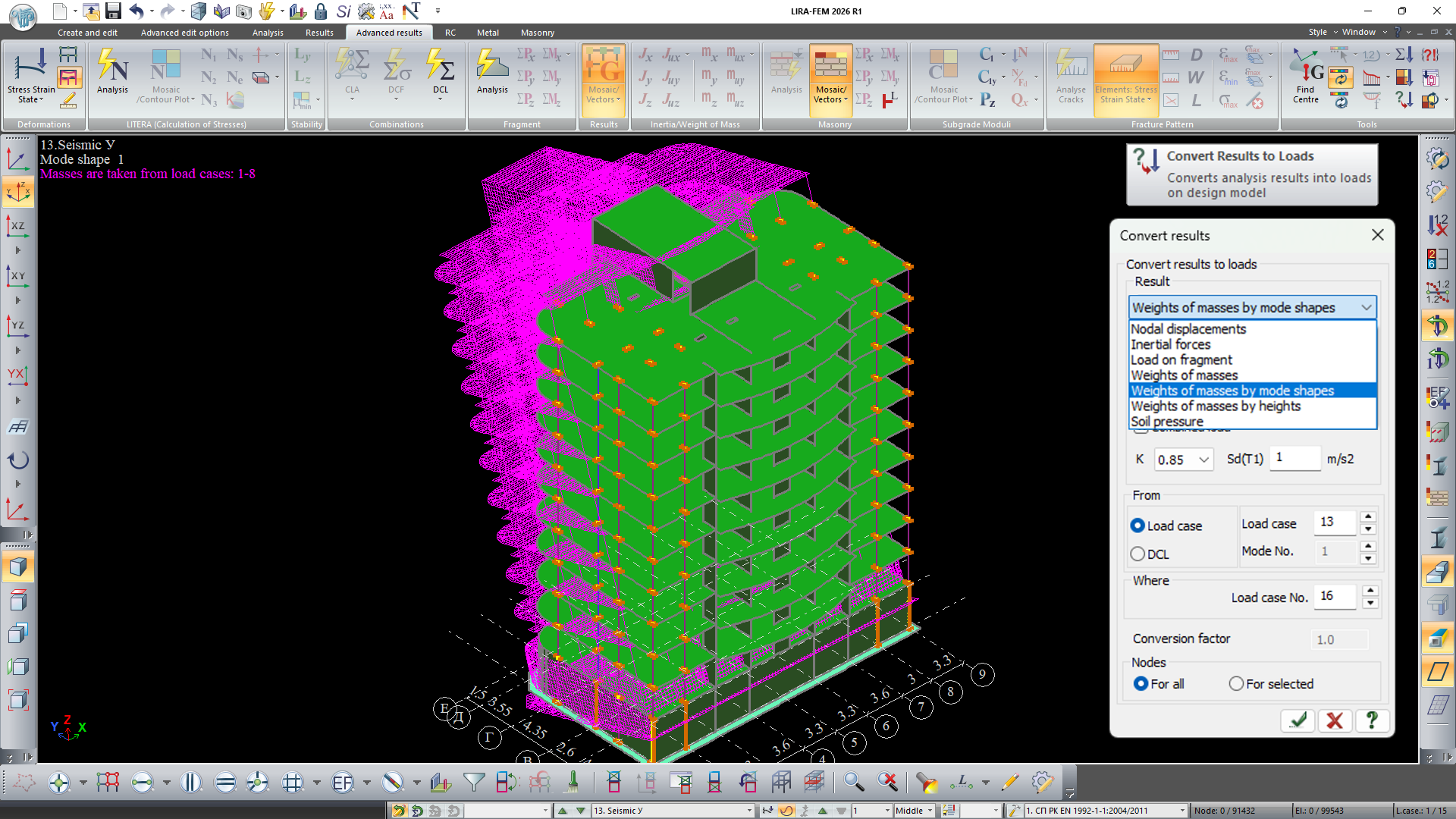
Implemented the ability to convert results of dynamic (seismic) load cases into mass weights — mass weights, mass weights by heights (according to formula 4.11 EN 1998-1:2004), mass weights by modes (according to formula 4.10 EN 1998-1:2004).
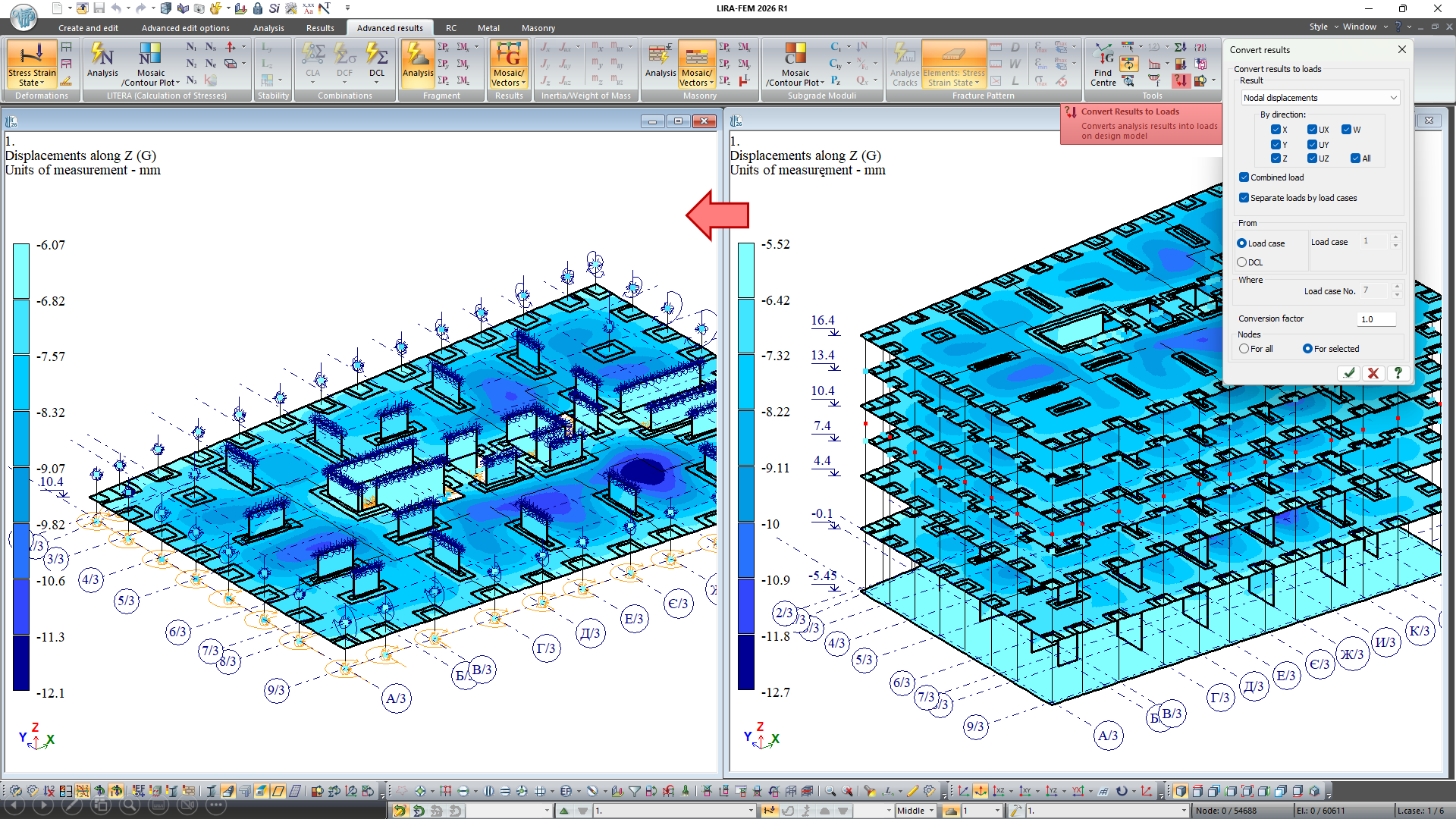
Also added the ability to select directions (X, Y, Z, Ux, Uy, Uz, W) when converting any analysis results into loads.
In addition, when converting nodal displacements and loads to a fragment, a function for automatic distribution of loads by load cases has been implemented.
This tool is convenient when working with large design models, where a fragment of the model is to be calculated (in a copy of the problem file) considering loads from the discarded part of the model, especially if the original model contains many load cases and complex DCL. The new functionality significantly simplifies such model reduction.
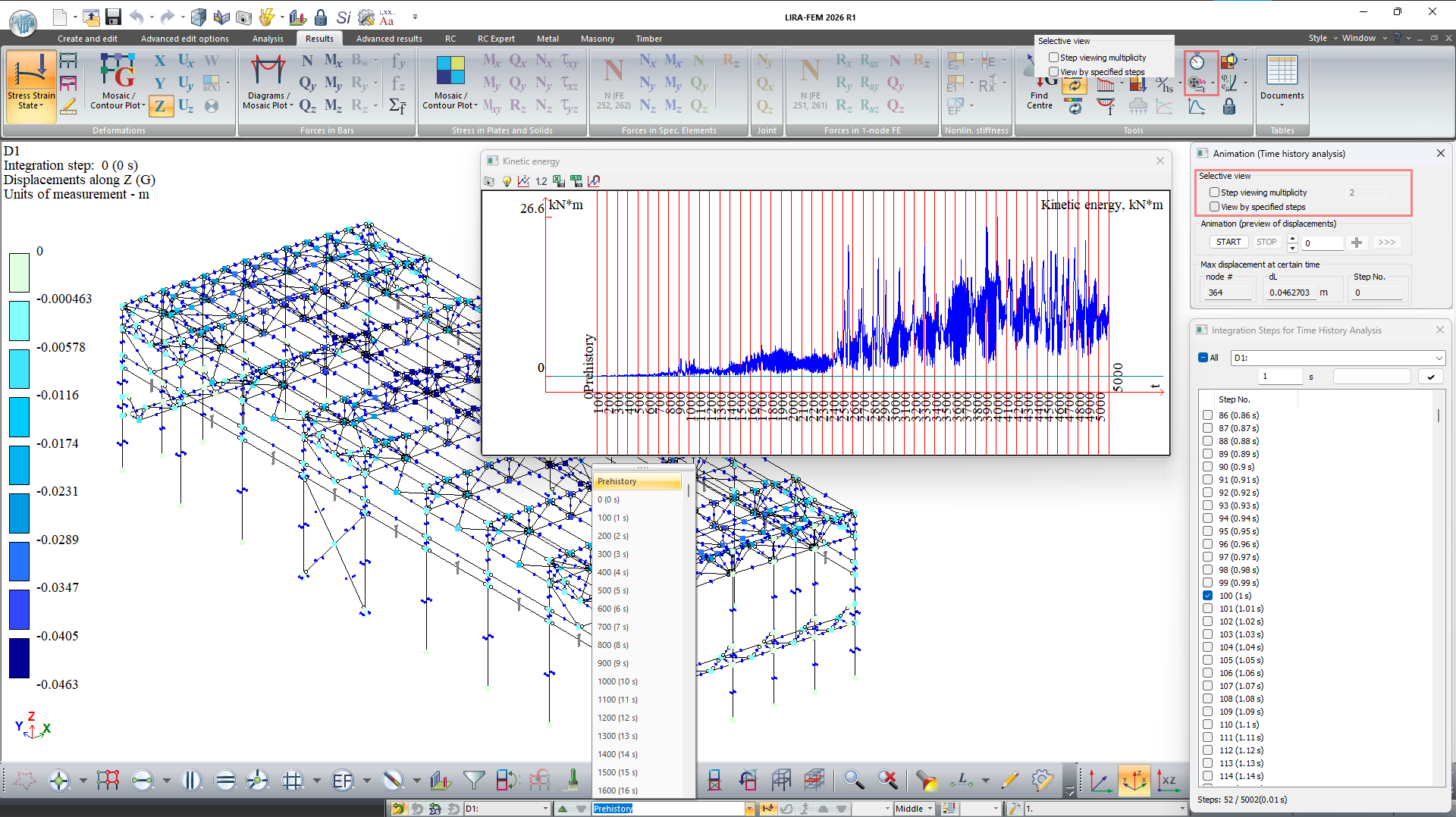
- For time-history analysis, implemented selection of control time moments with a specified interval (every n-th step). Added modes View by marked steps and Step multiplicity when viewing animation of analysis results.
- Added the ability to display loads defined in the prehistory.
- For problems with time-history analysis (direct integration of motion equations), implemented calculation of total masses based on results both for the entire model and for its fragments.
-
Implemented new modes of mosaic plots:
— intensity of projected loads without considering the inclination angle of elements relative to planes orthogonal to these loads;
— specified displacements, rotations, and warping at nodes;
— nodes indicated as “Ignore nodes in pack procedure”;
— numbers of load groups on a fragment that include the element;
— specified restraints at nodes of bar elements.